You are here
Exercise Set 8.3
Last updated at June 9, 2026 by Teachoo
Transcript
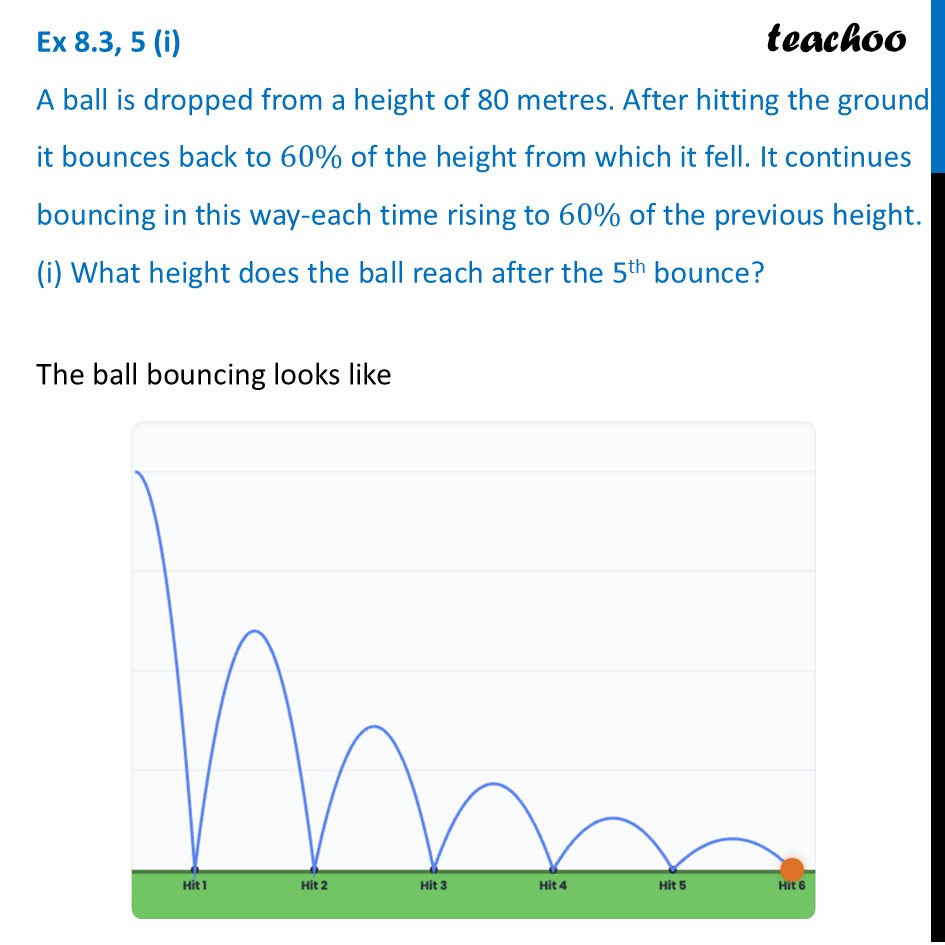
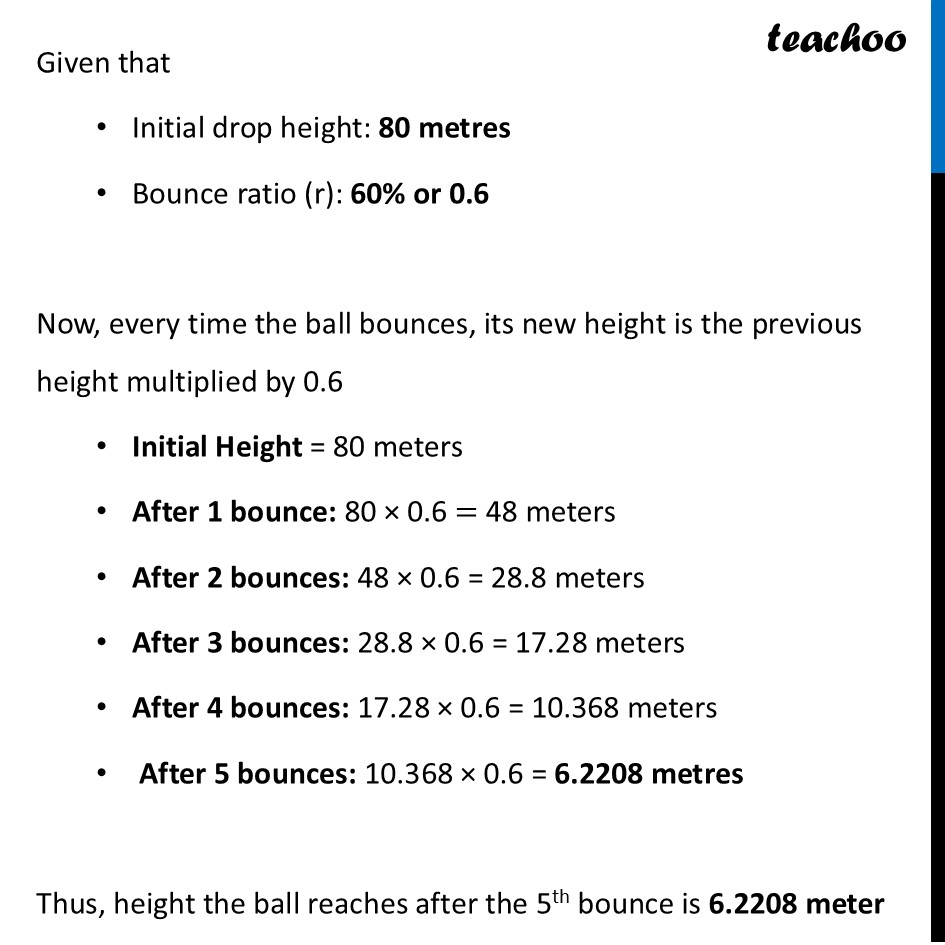
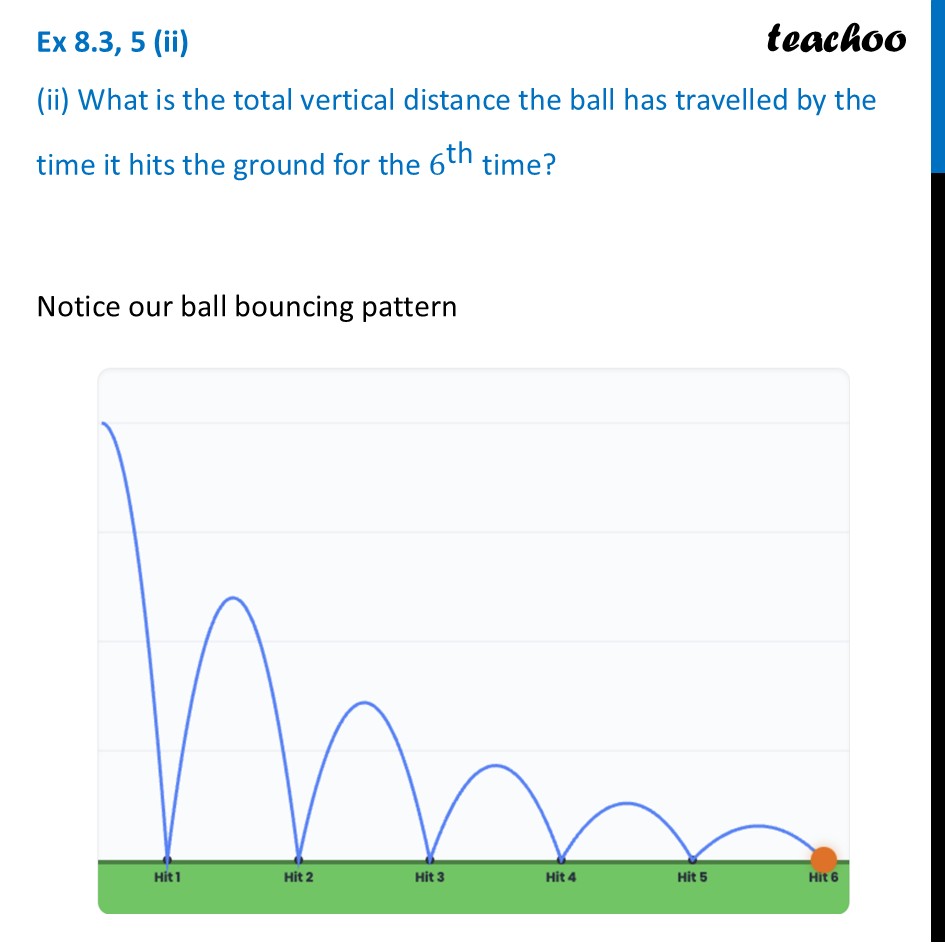
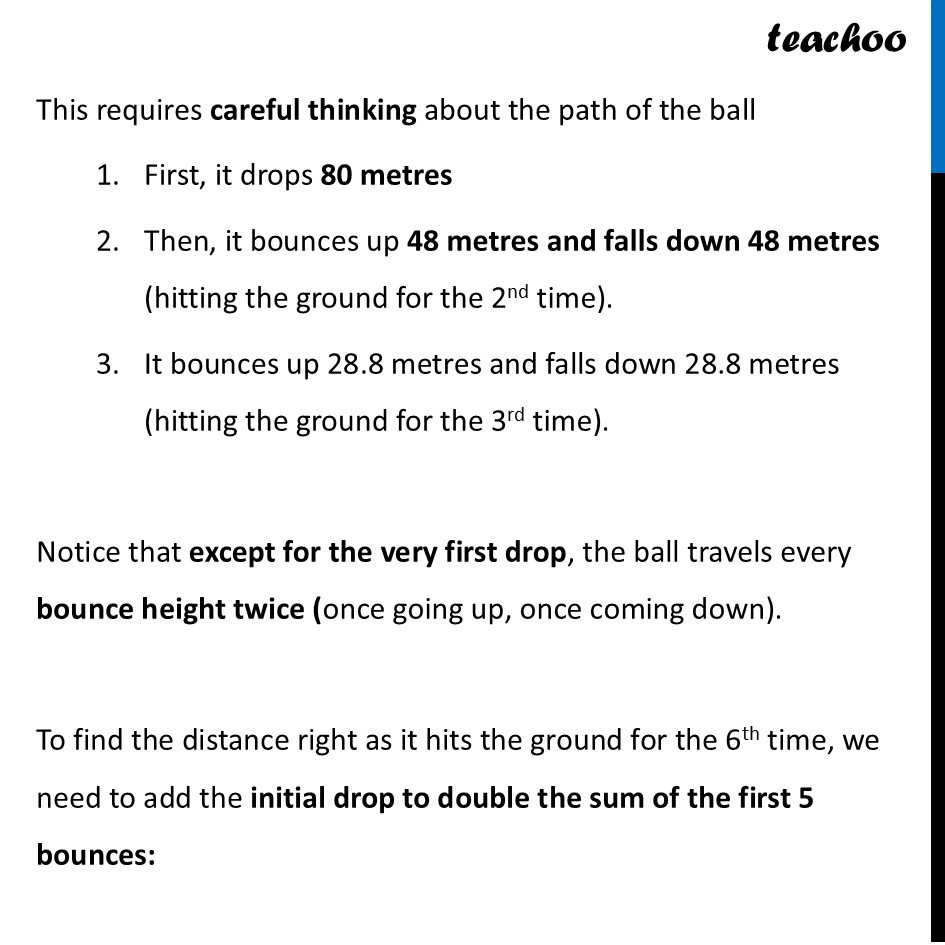
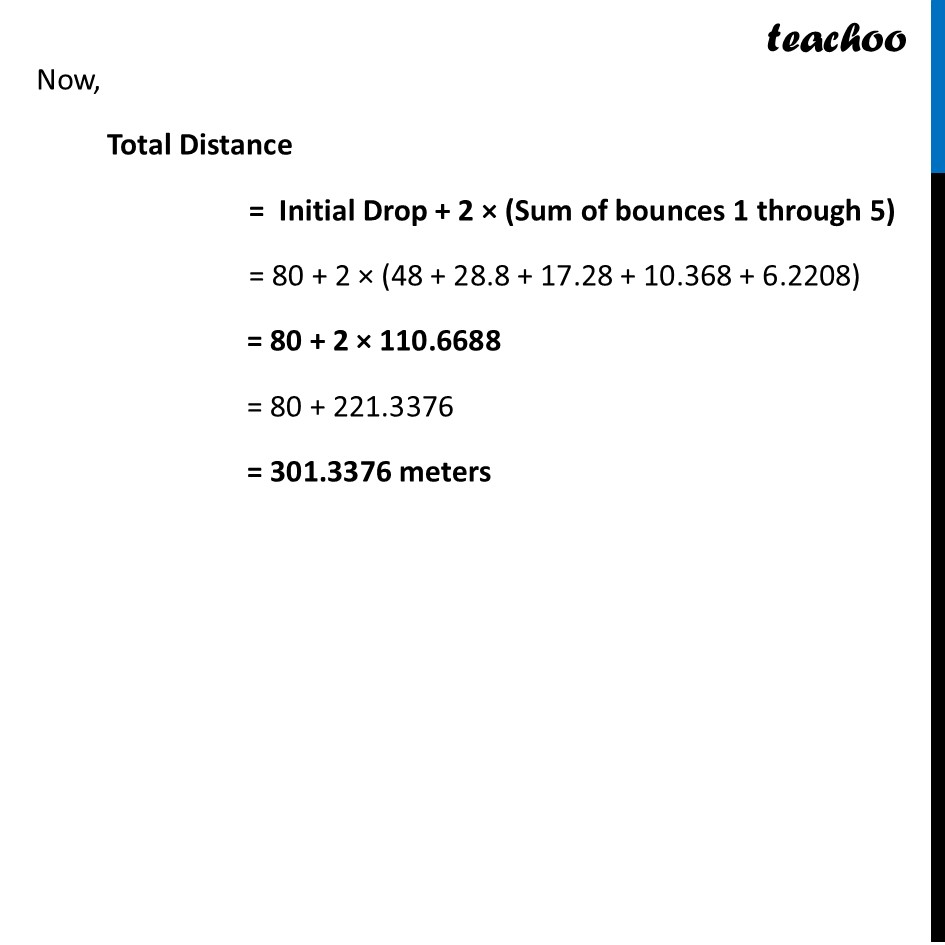
Ex 8.3, 5 (i) A ball is dropped from a height of 80 metres. After hitting the ground, it bounces back to 60% of the height from which it fell. It continues bouncing in this way-each time rising to 60% of the previous height. (i) What height does the ball reach after the 5th bounce? The ball bouncing looks like Given that Initial drop height: 80 metres Bounce ratio (r): 60% or 0.6 Now, every time the ball bounces, its new height is the previous height multiplied by 0.6 Initial Height = 80 meters After 1 bounce: 80 × 0.6 = 48 meters After 2 bounces: 48 × 0.6 = 28.8 meters After 3 bounces: 28.8 × 0.6 = 17.28 meters After 4 bounces: 17.28 × 0.6 = 10.368 meters After 5 bounces: 10.368 × 0.6 = 6.2208 metres Thus, height the ball reaches after the 5th bounce is 6.2208 meter Ex 8.3, 5 (ii) (ii) What is the total vertical distance the ball has travelled by the time it hits the ground for the 6^"th " time? Notice our ball bouncing pattern This requires careful thinking about the path of the ball First, it drops 80 metres Then, it bounces up 48 metres and falls down 48 metres (hitting the ground for the 2nd time). It bounces up 28.8 metres and falls down 28.8 metres (hitting the ground for the 3rd time). Notice that except for the very first drop, the ball travels every bounce height twice (once going up, once coming down). To find the distance right as it hits the ground for the 6th time, we need to add the initial drop to double the sum of the first 5 bounces: Now, Total Distance = Initial Drop + 2 × (Sum of bounces 1 through 5) = 80 + 2 × (48 + 28.8 + 17.28 + 10.368 + 6.2208) = 80 + 2 × 110.6688 = 80 + 221.3376 = 301.3376 meters